Congratulations to Yan-Siou Liu, Chao-Hsien Chih, Yu-Hsin Chen, Yu-Hsiang Chen, Tzu-Ching Su, Chih-Yu Lin, Ai-Lin Liu, and Pin-Yun Li for winning multiple awards at the 33rd Satellite Design Contest in Japan!!!
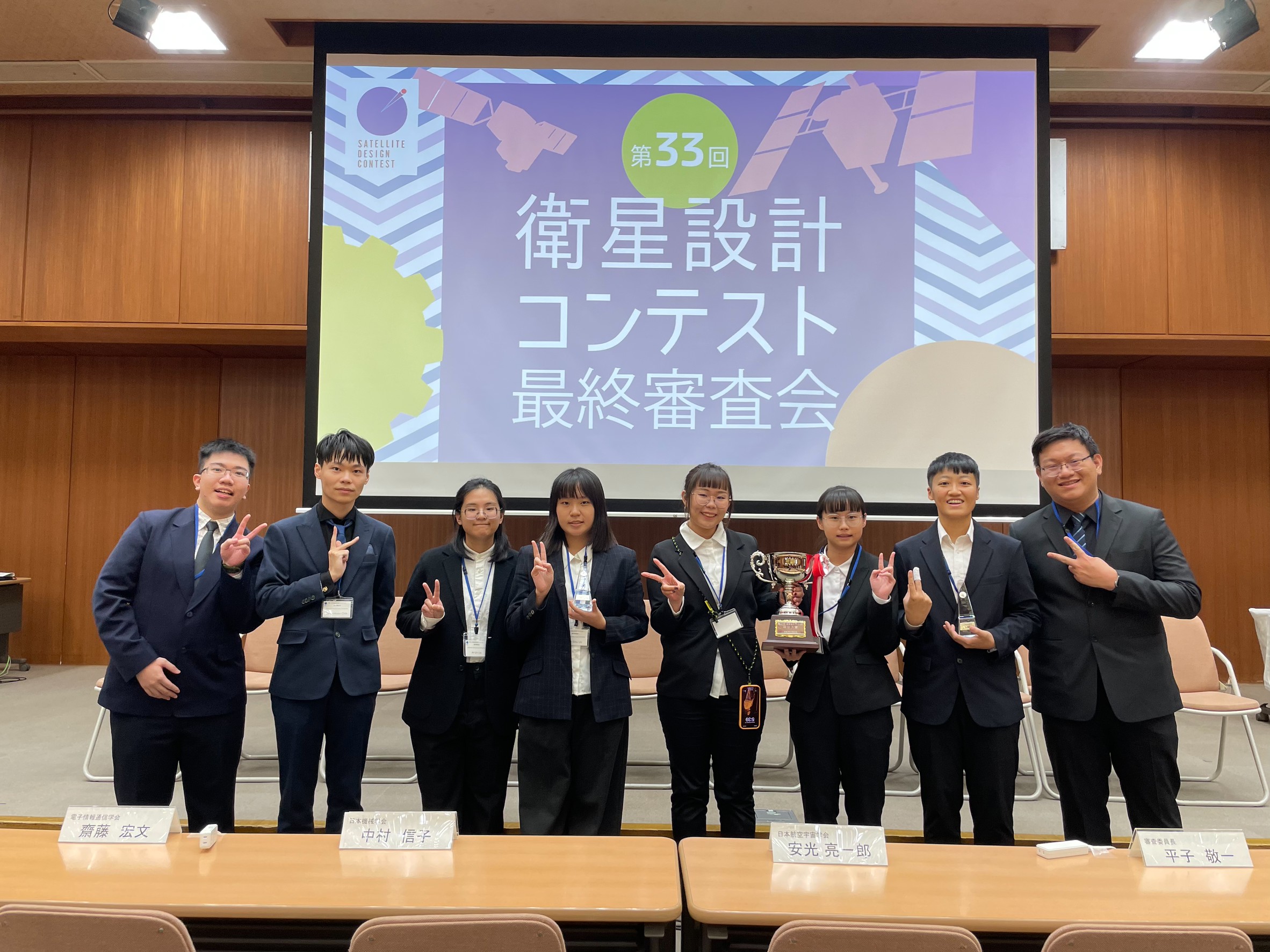
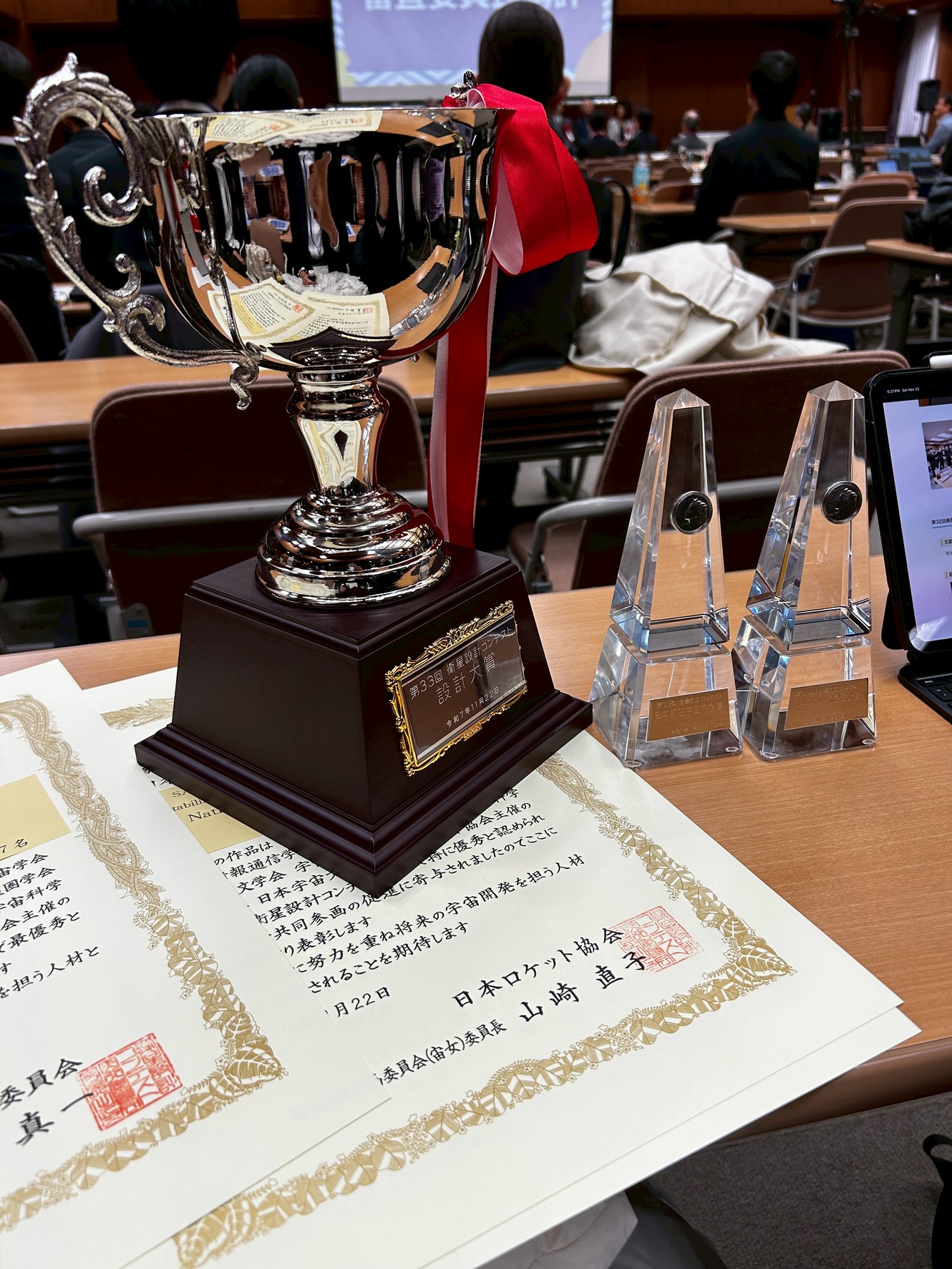
Congratulations to Yan-Siou Liu, Chao-Hsien Chih, Yu-Hsin Chen, Yu-Hsiang Chen, Tzu-Ching Su, Chih-Yu Lin, Ai-Lin Liu, and Pin-Yun Li (advised by Prof. Woei-Leong Chan and Prof. Yu-Jui Liang) for their outstanding achievements in the 33rd Satellite Design Contest in Japan. Their project, “SATEBAL: A Semi-Passive Orbital Attitude Stabilization System using a Controllable Deployment Mechanism,” proposes an innovative use of a drag sail system for CubeSat attitude control and deorbiting. The team excelled in the final round and received multiple prestigious awards, including the Design Grand Prize, the Japan Rocket Society Space Woman Award, and the Japan Society for Aeronautical and Space Sciences Award.
This competition is an educational initiative designed for university, technical college, and high-school students across Japan, offering a comprehensive experience covering mission concept development, engineering design, and system-level implementation. It is co-organized by leading Japanese aerospace institutions, including the Japan Society of Mechanical Engineers (JSME), the Japan Society for Aeronautical and Space Sciences (JSASS), and the Japan Aerospace Exploration Agency (JAXA). Participating teams must pass a preliminary document screening before advancing to the final round for public presentations and expert evaluations.
The theme idealized by the team’s design aligns with the United Nations Sustainable Development Goals (SDGs) by promoting innovation in space technology (SDG 9), reducing orbital debris through controlled deorbit strategies to protect the space environment (SDG 13), and fostering international educational collaboration through global competition (SDG 17), demonstrating NCKU’s commitment to sustainable and internationalized space development.
A total of 13 outstanding finalist teams advanced to this year’s final round, making the contest highly competitive. This remarkable achievement showcases the exceptional capabilities of our students in satellite mission design, attitude control, and space engineering innovation, reinforcing our institution’s strong international presence in aerospace and space-systems education. We look forward to seeing even greater accomplishments in the future!